
Chapter 1 of 10·26 min left in book
Chapter 1
Is It Really Weight Regain?

The scale can move two or three pounds between yesterday and today without telling a useful story. Fluid, salt, a later meal, a harder workout, a menstrual cycle, constipation, and the hour you stepped on the scale all move the number. That movement is ordinary. It is not automatically regain.
What matters is the trend: repeated measurements, under similar conditions, over weeks. One morning is weather. Several weeks can be climate. If you weigh, use the same scale, similar clothing, and a similar time of day, then look at the line — not the loudest point on it.
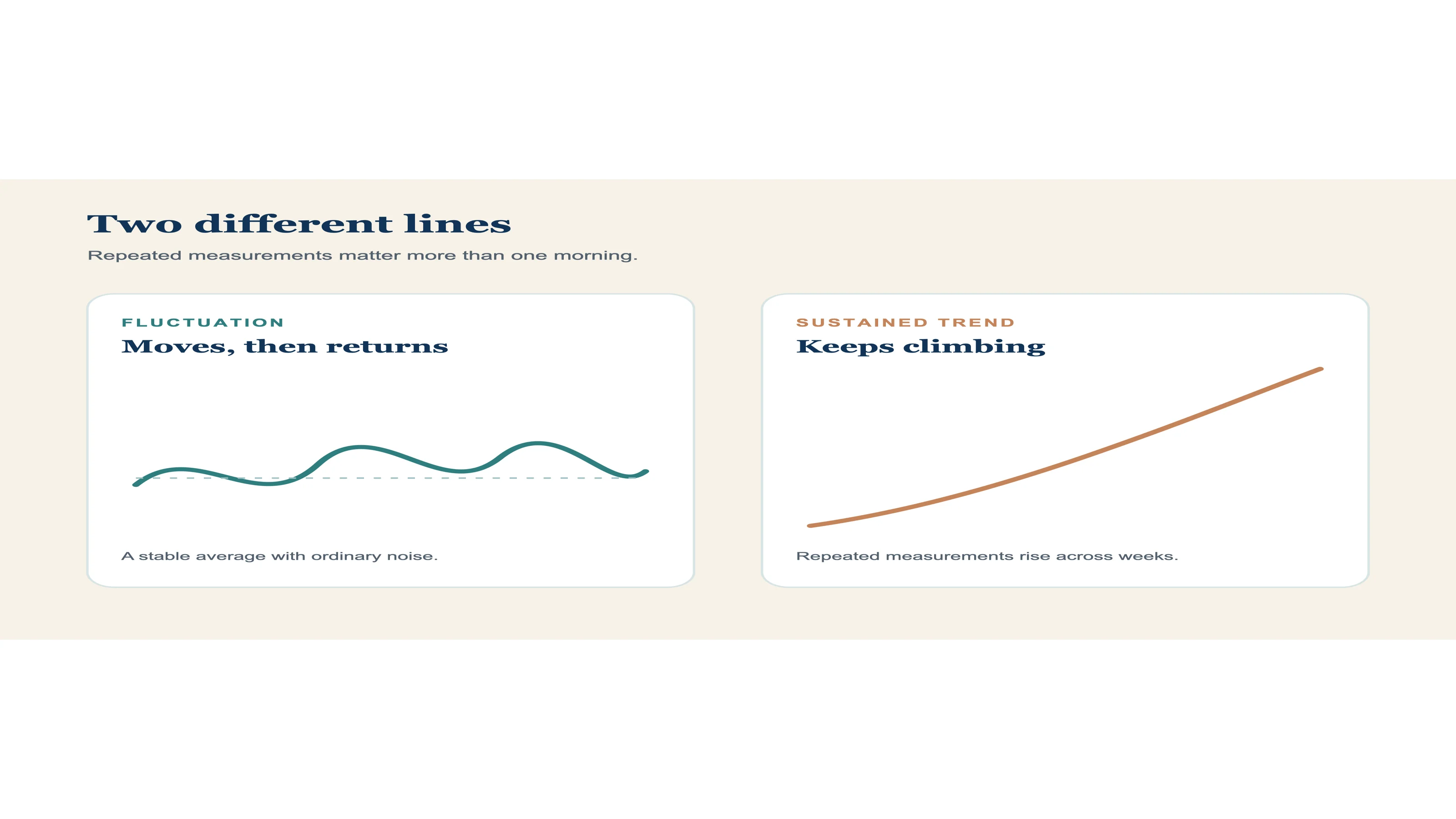
Fluctuation moves around a stable average. A sustained upward trend keeps climbing.
It helps to name four different patterns so they are not treated as the same event.
Stalled loss. The downward line has flattened while treatment is still in place. That is a plateau during ongoing care. It is a different problem, and it is not the subject of this book.
Fluctuation. The number moves up and down around a stable average. Clothes, energy, and repeated measurements still tell the same story.
Partial regain. Some of the lost weight has returned, then the line levels. The new average is higher than the lowest point and is no longer climbing.
Sustained upward trend. Repeated measurements keep rising across weeks. This is the pattern the withdrawal trials were built to study.
This book is about the last two patterns when treatment exposure, dose, or access changes. It is not an argument for weighing yourself into distress. If the scale increases anxiety, secrecy, or disordered eating, stop daily weighing and use how clothes fit, strength, energy, and measurements taken with a clinician instead.