
Chapter 2 of 11·16 min left in book
Chapter 2
What Testosterone Level Is Considered Low?
Men often ask:
“What is a normal testosterone level?”
That sounds like a simple question.
It is not quite that simple.
The American Urological Association uses a total testosterone below 300 ng/dL as a reasonable level to help support the diagnosis of low testosterone.
But a number by itself does not make the diagnosis.
One Low Test Is Not Enough
Testosterone levels can change.
They can vary:
- From morning to afternoon
- From one day to another
- With poor sleep
- During illness
- With changes in weight
- With some medicines
- With changes in nutrition
So if your testosterone is low once, your doctor will usually want to check it again.
A proper diagnosis usually requires:
1. Symptoms that fit low testosterone
AND
2. Low testosterone on more than one blood test
This helps prevent men from starting lifelong treatment because of one unusual lab result.
One low test is not enough
- 1 · Symptoms
- Symptoms should fit low testosterone.
- 2 · Morning test
- The first low result should come from properly timed blood testing.
- 3 · Confirmation
- More than one low blood test usually supports the diagnosis.
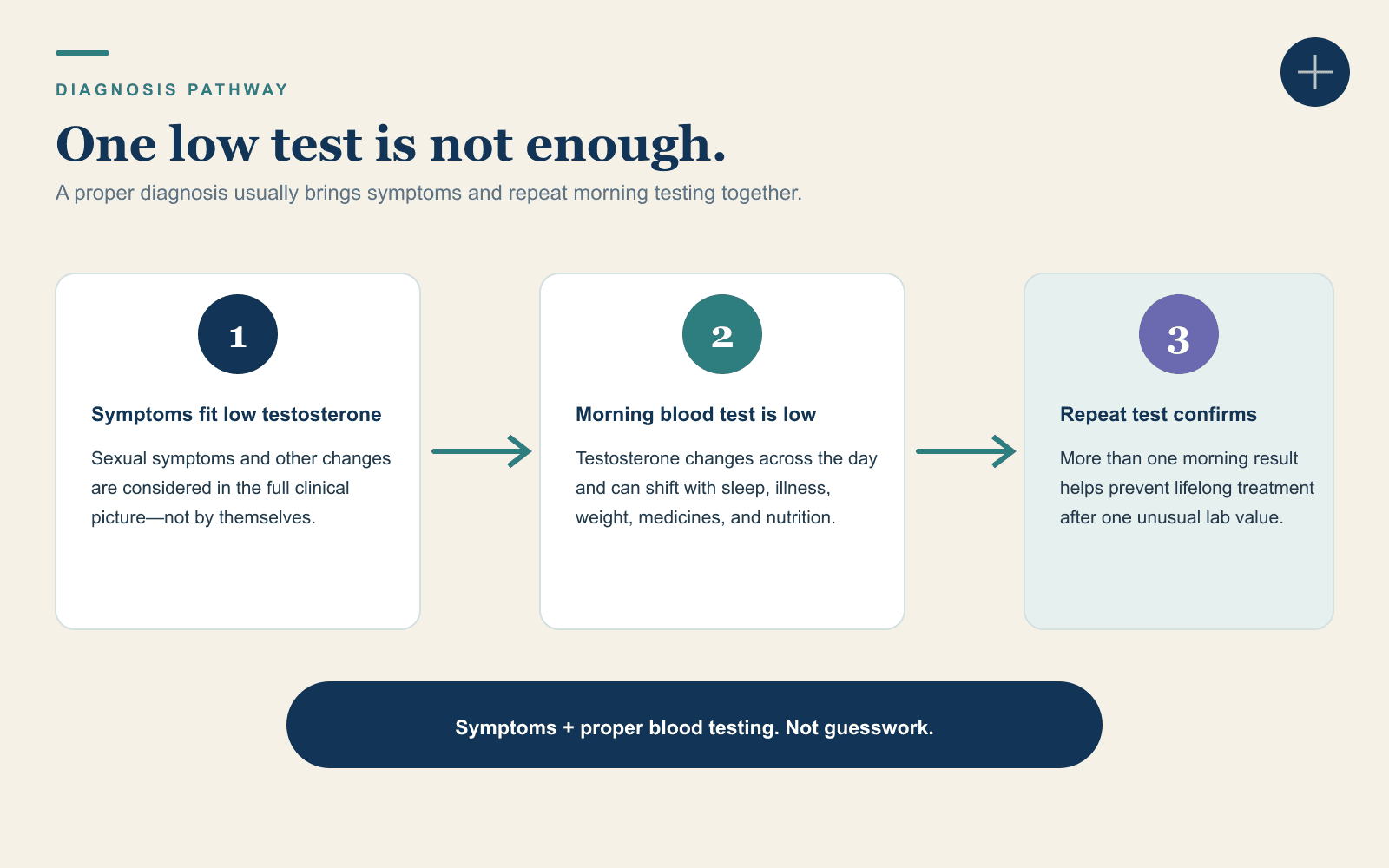
A proper diagnosis usually brings symptoms and repeat morning testing together.
What About Testosterone Levels by Age?
You may have seen charts online showing testosterone levels for men in their 20s, 30s, 40s, 50s, and beyond.
Those charts can be interesting.
But they can also be misleading.
“Your testosterone is low, but you are older, so that is normal.”
Age is part of the picture, but symptoms and proper testing still matter.
At the same time, TRT is not an anti-aging treatment for every older man.
The question is not:
“Am I as high as a 25-year-old?”
The better question is:
“Do I have symptoms plus confirmed testosterone deficiency that may benefit from treatment?”
Total Testosterone vs. Free Testosterone
Most evaluations begin with total testosterone.
But testosterone travels through your blood attached to proteins.
A smaller amount is available as free testosterone.
Your clinician decides when free testosterone adds useful information.